
When Can You Go on Pointe? How Readiness Is Determined

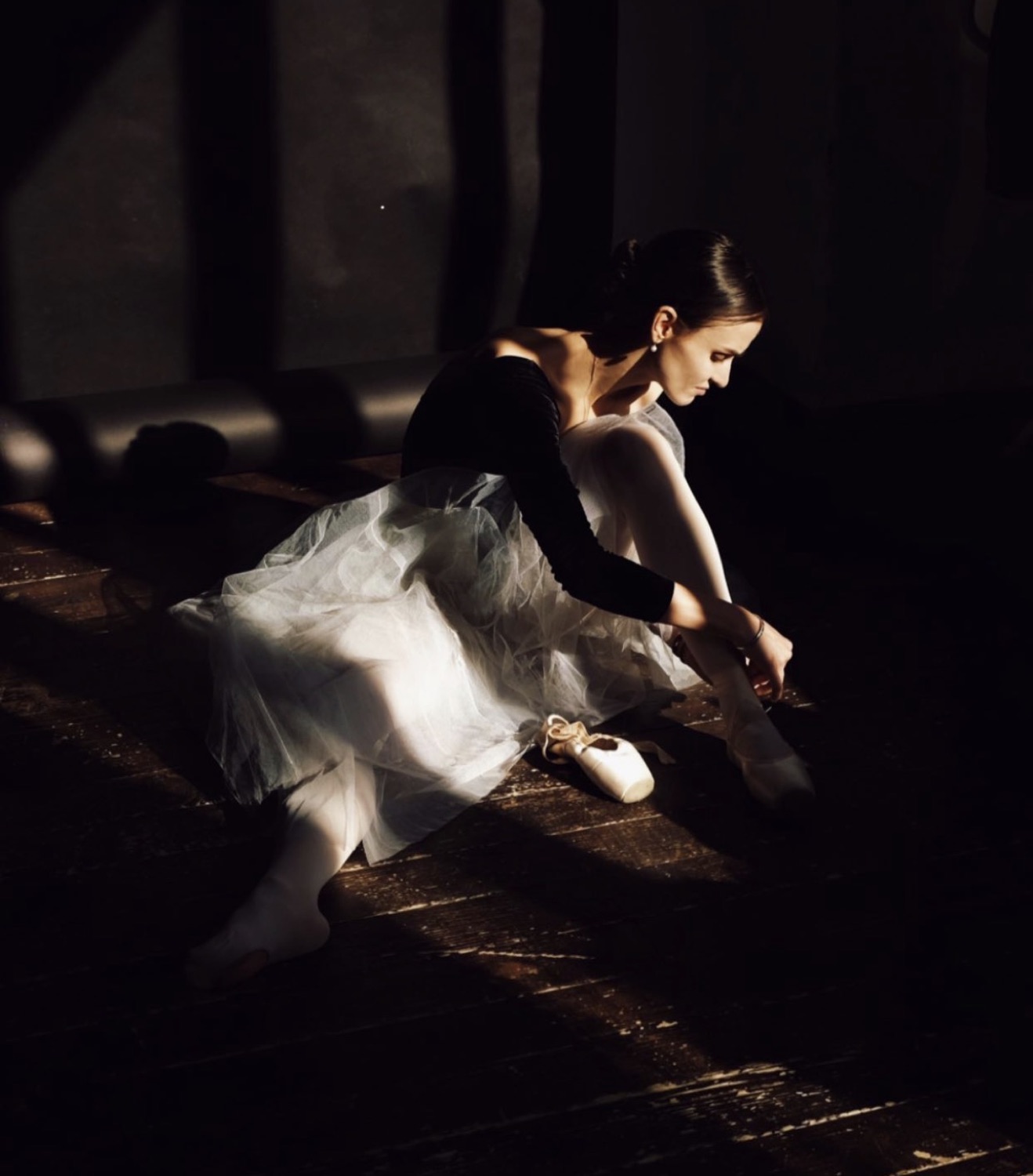
It's not about age, it's about readiness: a dancer is ready for pointe (pointe work, dancing on the tips of the toes) when the body has mastered the strength, technique and stability the work requires, not when it reaches a certain birthday. That readiness is judged by a qualified teacher watching the body, never by a calendar.
Almost every conversation about pointe begins with a question about age. "At eight? At nine? At ten?" Parents look for a number, as if there were a birthday after which the foot is magically ready to work on the tips of the toes. The hope is understandable, but it is precisely the hope that most often leads to injury.
The truth is less comfortable and far more important: pointe is not about age, it is about readiness. And readiness is defined not by the calendar, not by the child's wish, not by a classmate's example, but by a trained teacher who can see that the body has finally learned to do what it must.
Why It's Not About Age, but About Readiness
The numbers "8, 9, 10 years old" that pass from mouth to mouth are not a rule; at best they are a statistical observation. In many children the musculoskeletal system does mature around that age: the bones of the foot strengthen and stability appears. But "many" is not "all," and it is certainly not "your child, because she just turned nine."
Readiness for pointe is a combination of acquired skill and physical maturity. Skill is built over years of regular classical training. Physical maturity arrives in each body at its own pace. That is why a good teacher never answers the pointe question with a single number. The answer is: "Let's see what the body can do."
This is the essence of the Vaganova school, the St. Petersburg academic system in which I trained and worked: the body is prepared for pointe step by step, year after year, and the move is made only once the foundation is truly built.
What the Teacher Actually Checks
A readiness assessment is not one test but a complete picture. Here is what it includes in practice.
Years of Steady Preparation
First of all, time spent in thoughtful classical practice, usually several years of regular work at the barre. Pointe is not "added" to a weak base; it exposes any weakness without mercy. If the foundation is not ready, the tips of the toes are the last place you want to discover it.
Strength of the Foot and Ankle
The foot and ankle must be strong enough to hold the body's weight in the correct position rather than "collapsing" under it. This is built through hundreds of relevés (relevé, the rise onto the half-toe) and work on the half-toe, the demi-pointe. If a student cannot yet hold a confident demi-pointe, talk of pointe is premature.
Correct Demi-Pointe and Relevé
The half-toe is the rehearsal for pointe. The teacher watches whether the student rises to the full height of the half-toe, holds the shape there, and lowers evenly. A high, stable, controlled demi-pointe is a non-negotiable condition. Without it, pointe is impossible.
Aplomb and Alignment
Aplomb (aplomb, balance held from a single axis) is the ability to maintain the vertical from one center. On pointe, the base of support shrinks to a few square centimeters. If there is no aplomb on the full foot, there will be even less of it on pointe.
Control of En Dehors
En dehors (the outward rotation of the legs from the hip) must not only exist anatomically but be governed by the muscles. What matters is not "maximum" turnout but the ability to control it actively. Passive, unsupported turnout is dangerous on pointe for the knees and the ankle.
No "Rolling" of the Foot
The two main red flags are rolling inward (rolling, collapsing onto the big toe) and turning outward (sickling, a sickle-shaped foot). Either habit on pointe leads straight to a ligament injury. The foot must stand strictly over its center, through the second and third toes. The teacher checks this with particular care.
Core Stability
And finally, the center. A strong, gathered core is what holds the whole structure together. A weak center means the load will fall on the ankle and knees, which are not built for it.
Why Rushing Does Harm
Premature pointe is not dangerous "in theory." Immature foot bones, weak ligaments, and unsettled technique under load are a real risk of injury. But there is a second harm, less obvious and almost as serious: the locking-in of incorrect habits.
A body that goes on pointe too early looks for a way to survive, and it finds one in compensations: a collapsed foot, clawed toes, a clenched torso, poor distribution of weight. These habits embed themselves in muscle memory, and they then take years to retrain. Often it is harder to correct an error that has already formed than it would have been to build the technique from scratch. Rush by one year, and you can lose three.
That is why an honest teacher sometimes says "not yet," even when neither the child nor the family wants to hear it. This is not strictness for its own sake. It is protection.
What About Adults Who Started Later?
This question comes up often, and it deserves an honest answer.
If you came to ballet as an adult, that does not mean pointe is closed to you forever, but it does not mean it will happen quickly either. The adult body is already formed: the bones no longer grow, and in that sense some of the risks of childhood are absent. On the other hand, en dehors, ankle mobility, and foot strength are built more slowly in an adult and call for patient, regular work.
The honest answer is this: many motivated adults, with systematic practice, do reach readiness for pointe, but as the result of months and years of conscious preparation, not as a goal of the first lessons. And the criteria are exactly the same: a strong foot, a stable demi-pointe, aplomb, control of en dehors and of the center. The body is not asked for its passport; it is asked about its readiness.
Why an Individual Assessment Decides Everything
None of the above can be judged "by eye" in a group of fifteen. A collapsing foot, a barely perceptible loss of aplomb, an unsupported turnout: these are nuances visible only through close, attentive observation.
That is why the one-on-one format makes the pointe decision safer. One on one, the teacher sees every detail, checks every criterion, and makes a decision based on the specific body in front of her, not on a class average. Readiness is an individual thing, and assessing it properly is individual too.
A Few Words About Pointe Shoes Themselves
Once readiness is confirmed, one important practical step remains: properly fitted pointe shoes. The shoe is chosen for the specific foot: its width, its shape, its instep (instep, the curve of the foot that largely defines the "line"). A badly chosen pair undoes even the best preparation and becomes a source of injury in itself. This is not an area where you economize or buy "to grow into."
A Professional Readiness Assessment
If you are a parent who wants to know whether your child is ready, or an adult student dreaming of one day rising onto pointe, the place to start is an honest picture: what the body already knows and what remains to be built.
The trial session can include exactly that readiness assessment: calm, professional, and without pressure. Maria Dmitrienko, a graduate of the A.Ya. Vaganova Academy of Russian Ballet in St. Petersburg with 15 years at the Mikhailovsky Theatre, will watch your demi-pointe, relevé, aplomb, en dehors, and foot strength in Escazú or in your own home in the Greater San José area of Costa Rica, and tell you plainly whether you are ready now and, if not, what needs to be prepared and how long it will honestly take.
This is not a promise to put you on pointe "by summer." It is the beginning of a correct, safe path, the same one along which the St. Petersburg school has guided its students for nearly three centuries.
At Estudio de Ballet Ruso (balletruso.com), lessons are private and one-on-one, in classical ballet of the Russian Vaganova school, mainly in your home, with a studio in Escazú optional, taught in Russian or English with Spanish support on request.
Frequently asked questions
What age can you go on pointe?
The correct answer lies not in age but in readiness. The numbers "8 to 10 years old" reflect that in many children the body matures enough by that point and a base of training has accumulated. But the decision is made on concrete criteria of strength, technique, and stability, not on a date of birth.
How do I know if my child is ready?
By a combination of signs: several years of regular practice, a strong foot and ankle, a high and stable demi-pointe, aplomb, controlled en dehors, no rolling of the foot, and a strong core. Only a teacher can judge this through close, individual observation.
Can an adult who started late go on pointe?
Yes, it is possible for many motivated students, but as the result of months and years of systematic preparation, not of the first lessons. The readiness criteria for an adult are the same as for a child.
What happens if we rush?
Premature pointe work raises the risk of injury and locks in incorrect technical habits that are hard to retrain later. That is why a competent teacher sometimes says "not yet," and does so in the student's interest.
The first step is a trial session with Maria
Complimentary, studio fee only. Meet Maria, talk about your goals and try some exercises.
Book my trial session →