
Does Ballet Improve Posture? What It Really Trains, and What It Doesn't Promise
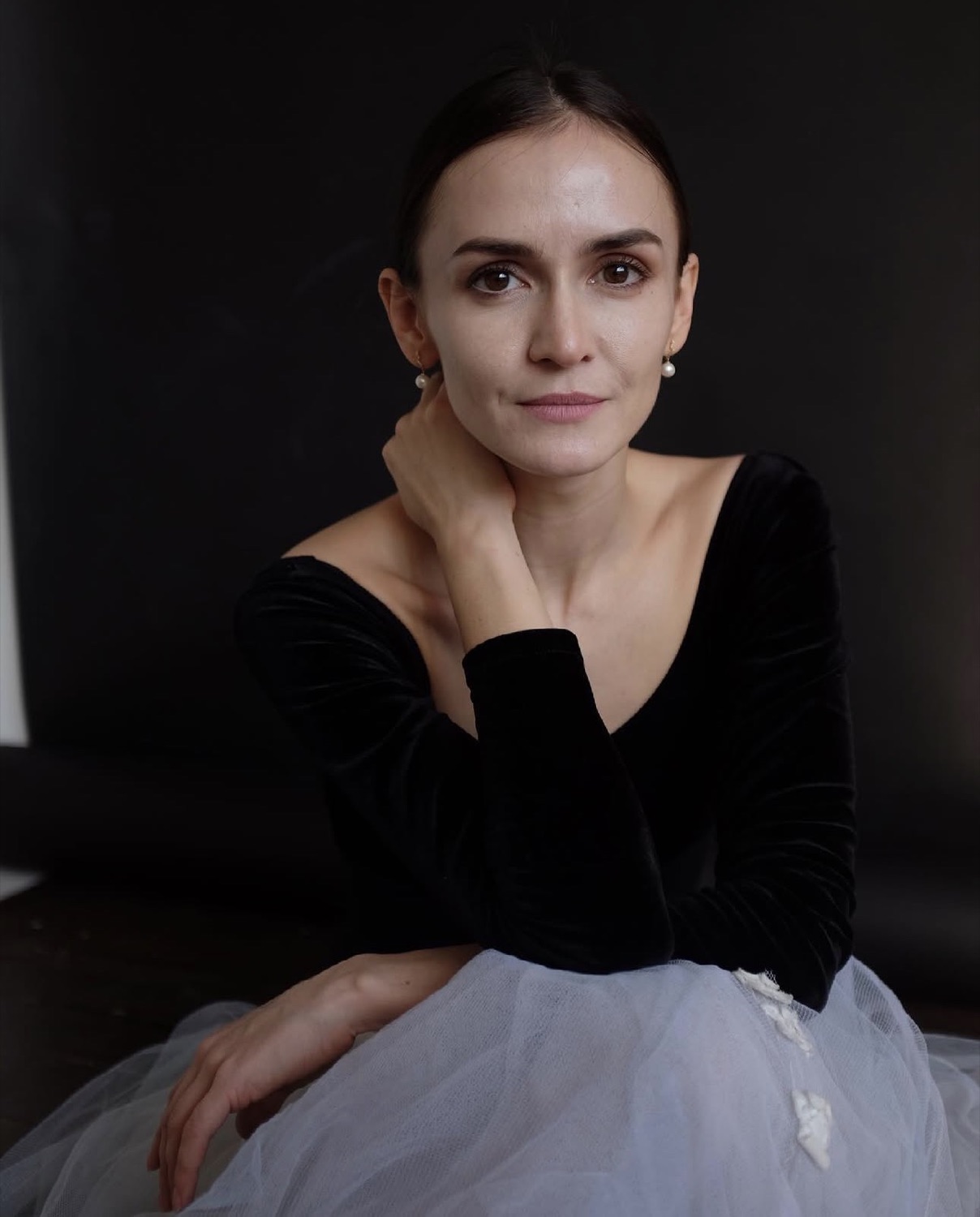
Yes: practiced regularly and under guidance, classical ballet trains alignment, body awareness, and the deep muscles that support the spine, so that standing tall starts to take less effort. It is not medical treatment and makes no promise to remove pain or correct any condition; it trains a habit, not therapy.
Many people come to ballet as adults not for the stage, but for how they carry themselves in everyday life: walking into a room, sitting down at a desk, standing in line. Ballet doesn't teach an exercise; it teaches posture as a habit. Below is an honest conversation about what classical dance really trains in an adult body, and where the line runs beyond which the work belongs to a doctor, not a teacher.
Why Does Ballet Build Posture Differently From the Gym?
At the gym you work a muscle within a set time: one set, rest, another set. That's useful, but posture doesn't live in the gym. It shows up in the twenty-three hours when you're not training.
Classical dance works differently. From the very first lesson it doesn't ask "how many reps?" but "how exactly are you standing right now?" Every movement begins from a built position: head, ribcage, pelvis and feet gathered into a single vertical. Ballet calls this position aplomb (a poise in which the body holds itself upright without tension, on its own, as if suspended by the crown of the head). Hour after hour you train not an isolated muscle but the very skill of staying gathered and centered. And gradually the body begins to reproduce that vertical outside class: at the desk, behind the wheel, on a walk.
The difference is fundamental. The gym tends to strengthen what you already use. Ballet re-teaches how you use yourself.
The Mechanics: What a Tall, Free Posture Is Made Of
Good posture is not "shoulders back" on command. It's the coordinated work of several body systems. Ballet attends to them separately and together.
Building the Vertical (alignment)
The first thing taught is to align the body along its axis: ears over shoulders, shoulders over pelvis, pelvis over the arches of the feet. It sounds simple, but in most adults that line has been shifted for years by habit: a forward head, closed shoulders, a collapsed or, conversely, over-tensed lower back. A teacher of the classical school sees these shifts at once and helps rebuild the axis, gently and piece by piece.
The Deep Center (core)
The core isn't the "abs" of everyday speech, but the deep muscular corset around the spine and pelvis: the transverse abdominis, the pelvic floor, the deep spinal stabilizers. These are what hold the spine the way guy-wires hold a mast. In ballet the core isn't worked in isolation; it engages in every plié, in every transfer of weight, because without it balance is impossible. This builds an enduring, invisible support that works all day, not just "on the count of eight."
A Balanced Back
Ballet doesn't "bulk up the back," it balances it. The long muscles along the spine learn to lengthen rather than clench; the upper back opens without thrusting the chest forward; the neck lengthens out of the shoulders. The goal is length and freedom, not stiffness. A back that knows how to be long tires less.
Turnout from the Hip (en dehors) and port de bras
Two classical concepts are often misunderstood. Turnout (en dehors, the outward rotation of the legs) comes not from the knee or the foot, but from the hip joint. In an adult it is always individual and never forced: a competent teacher takes exactly the rotation your hip offers, and not a degree more. Properly understood, it opens the pelvis and takes the twist off the knees.
Port de bras (the "carriage of the arms") is what turns posture into posture. In classical dance the arms move from the back, through the open ribcage, and that is what gives the torso the noble, un-hunched bearing by which someone with ballet poise is recognized.
Together, these elements give not "a straight back on command," but a tall, free way of carrying yourself that stays with you after class as well.
Honest Expectations and an Important Note
Here it needs to be said plainly. Ballet is training in posture, alignment, strength and body awareness. It is not treatment.
We don't promise to "cure the back," "fix" pain, or any illness. Ballet is not a substitute for a doctor, a physiotherapist, or a diagnosis. If you have back pain, a past injury, a hernia, a joint problem, or any medical condition, consult your doctor first, and only then, with their clearance, come to train. The teacher needs to know your limitations in advance in order to dose the load safely.
What does happen with regular practice: you feel your body better, you hold yourself upright more naturally, the stabilizing muscles gain endurance, and movement becomes more precise. Many people notice it has become easier to hold their back through the day. That is the result of training a skill, not a medical effect, and that's the honest way to put it.
Why Is One-on-One Safer for the Adult Body?
An adult body is not a child's. It has its own history: old injuries, work-related tension, different mobility on the left and the right, an individual range of joint motion. In a group class the load is set by the common tempo, and the body adapts to someone else's rhythm. For an adult starting from scratch, that's an added risk.
The individual format changes everything:
- Load made for you. Range, tempo, and difficulty are tuned exactly to your body today, not to an "average student."
- Real-time correction. The teacher sees every shift and corrects it on the spot, before it sets in as a habit.
- No one else's tempo. You're not chasing a group or forcing anything, which is the foundation of safety for the back and joints.
That's why the classical school is so careful in the one-on-one format: it's the most attentive way to bring an adult body into ballet.
What Does It Actually Feel Like in the First Weeks and Months?
Let's be honest: the first lessons aren't grace, they're attention. You get reacquainted with your body. Often, in the first weeks, muscles you never suspected switch on: a light, pleasant fatigue of the deep stabilizers, a sense of being "gathered" after class.
After a few weeks comes the first recognition: you catch yourself straightening up at the desk. After two or three months of regular practice, many people notice that upright posture stops demanding effort and becomes a background. This isn't turning into a ballerina; it's a calm, steady change in how you carry yourself.
Where to Start: Your First Class
Before building the lessons, your body needs to be seen in particular. At your trial session, Maria Dmitrienko, a graduate of the A.Ya. Vaganova Academy of Russian Ballet in St. Petersburg with 15 years at the Mikhailovsky Theatre, will look at your posture, your natural range of motion and your habitual shifts, talk through your goals and any medical limitations, and propose a plan that's safe for you. No rush and no obligation to continue. It's a calm, professional starting point in Escazú and Greater San José, and you're invited to book.
Learn about the one-on-one format and book your trial session on our service page.
Frequently asked questions
My back sometimes hurts. Will ballet help?
Ballet is training, not treatment, and where there's pain we can't promise any medical result. See your doctor first, without exception. If they find no contraindications and clear you to train, tell the teacher about all your limitations, so the load is dosed carefully and made for you. The goal of the lessons is posture, alignment and strength, not removing pain.
I've never danced and I'm already over forty. Is it too late?
No. Adults come to ballet precisely for posture and poise, not for the stage. The individual format exists exactly so you can begin from any starting point and at a safe pace.
Do I need special flexibility or turnout?
No. Turnout is unique to each person: it comes from the structure of the hip and is never forced. The teacher works with exactly the range you have today.
Where do the lessons take place, and in what language?
Mainly at your home, in Escazú and Greater San José; the studio in Escazú is optional. Lessons are taught in Russian or English, with Spanish support on request.
The first step is a trial session with Maria
Complimentary, studio fee only. Meet Maria, talk about your goals and try some exercises.
Book my trial session →