
The Vaganova Method: How the Russian School Teaches the Whole Body to Dance
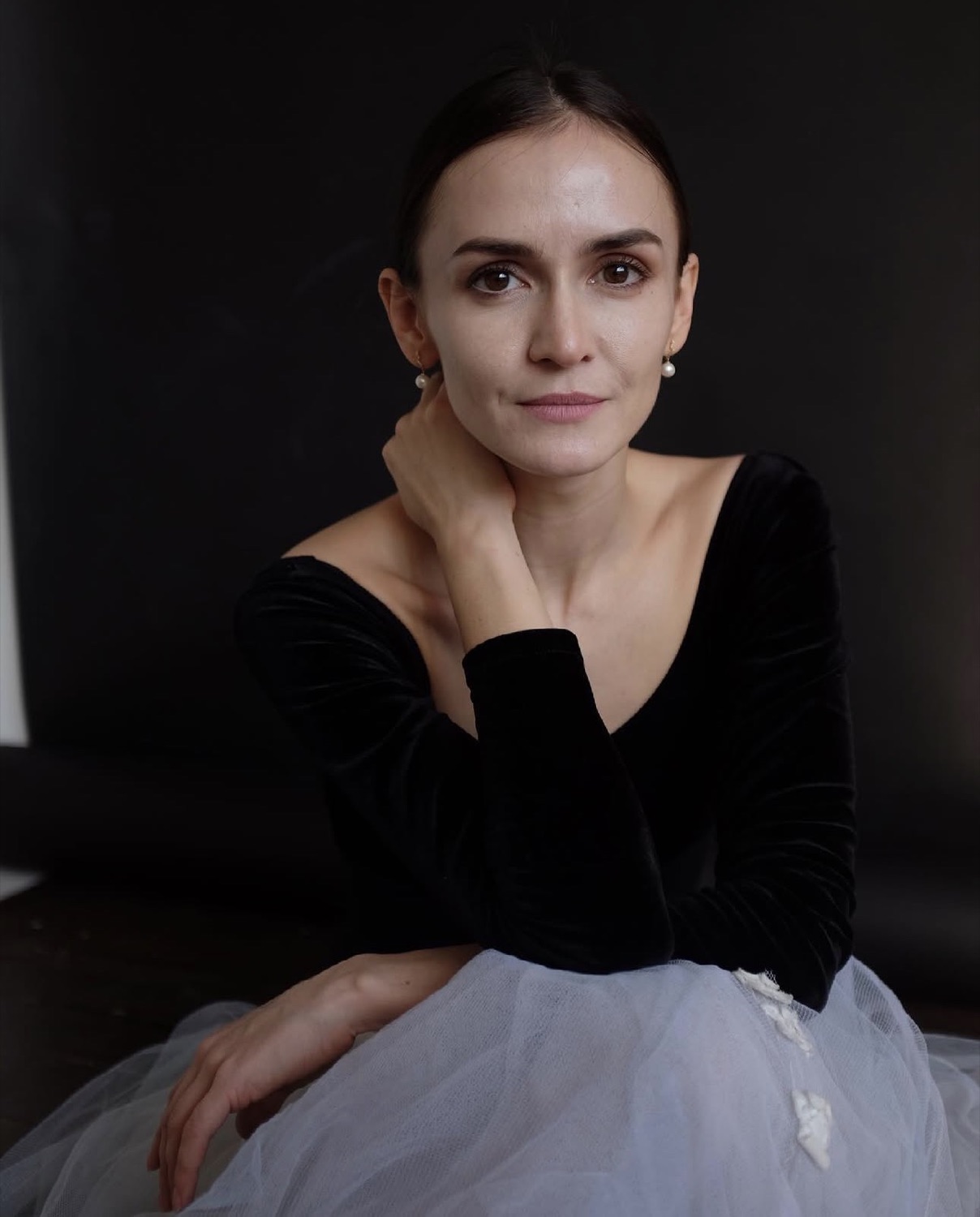
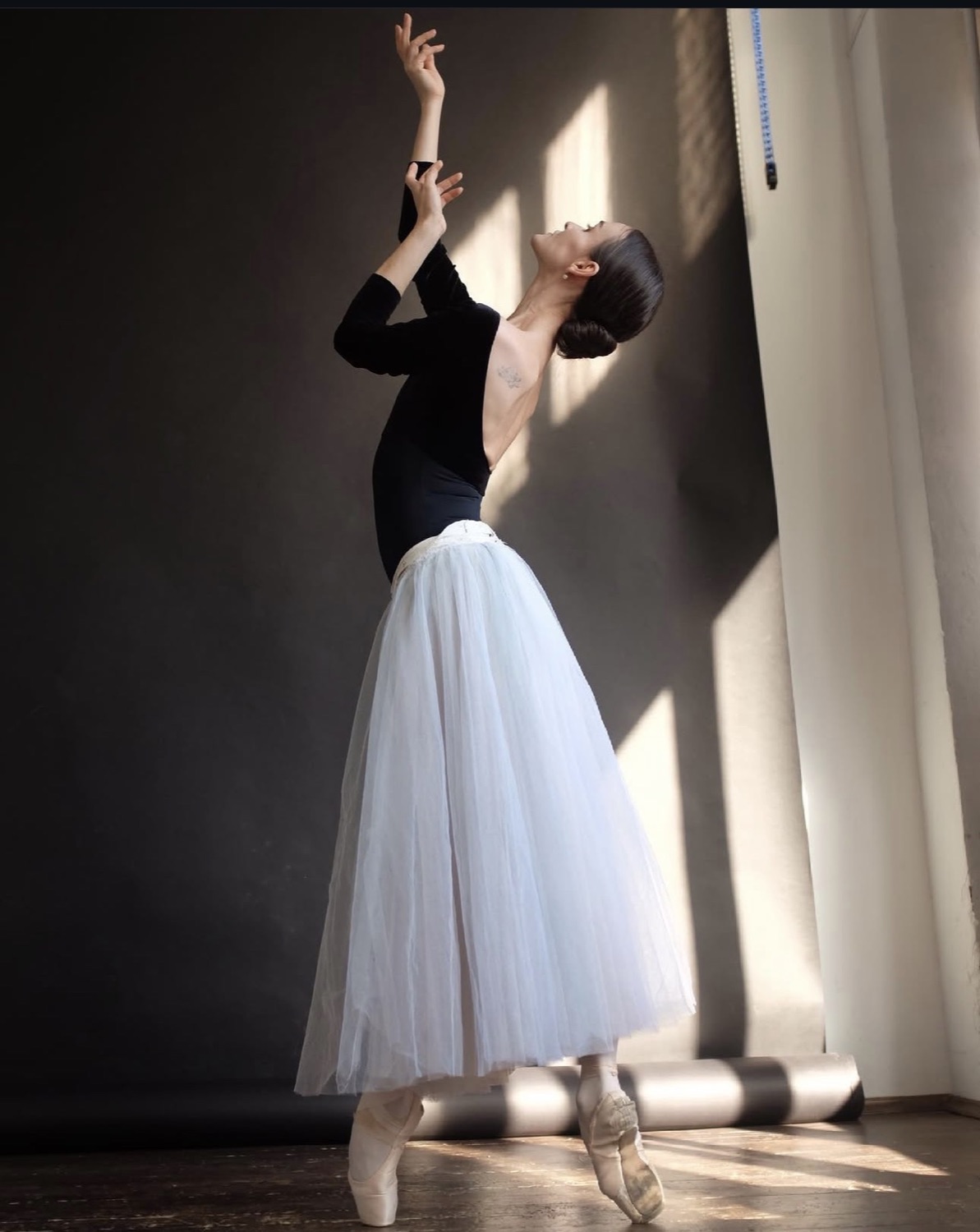
The Vaganova method is the system of classical ballet training developed in St. Petersburg by the dancer and pedagogue Agrippina Vaganova in the early twentieth century. It is the foundation of the Russian ballet school: a rigorous, anatomically honest progression that coordinates the entire body (legs, back, arms, head and gaze) into a single movement.
Ballet rarely begins with a jump. More often it begins with something quieter: with the way a person learns to stand, upright, calm, feeling the floor underfoot and the space around them. From that quiet moment the Russian school sets out, and that is why it remains one of the clearest systems for learning to dance anywhere in the world.
What is the Vaganova method?
In the early twentieth century, Agrippina Vaganova, a St. Petersburg ballerina and teacher, did what others before her had managed only in part: she turned ballet training into a coherent system. Not a collection of beautiful movements, but a logic built step by step: from the simple to the complex, from stability to freedom, from the isolated element to the harmony of the whole body.
Her book Basic Principles of Classical Ballet (1934) became the foundation on which the Academy of Russian Ballet in St. Petersburg grew, the academy that now bears her name. Out of those halls came dancers you can recognize by the way they hold the torso and arms. Maria Dmitrienko, a graduate of the A.Ya. Vaganova Academy of Russian Ballet in St. Petersburg with 15 years at the Mikhailovsky Theatre, now teaches in this very tradition in Escazú, Costa Rica.
The Vaganova method is not a style or an aesthetic. It is a way of teaching the body to think.
The principles that hold everything together
Coordination of the whole body
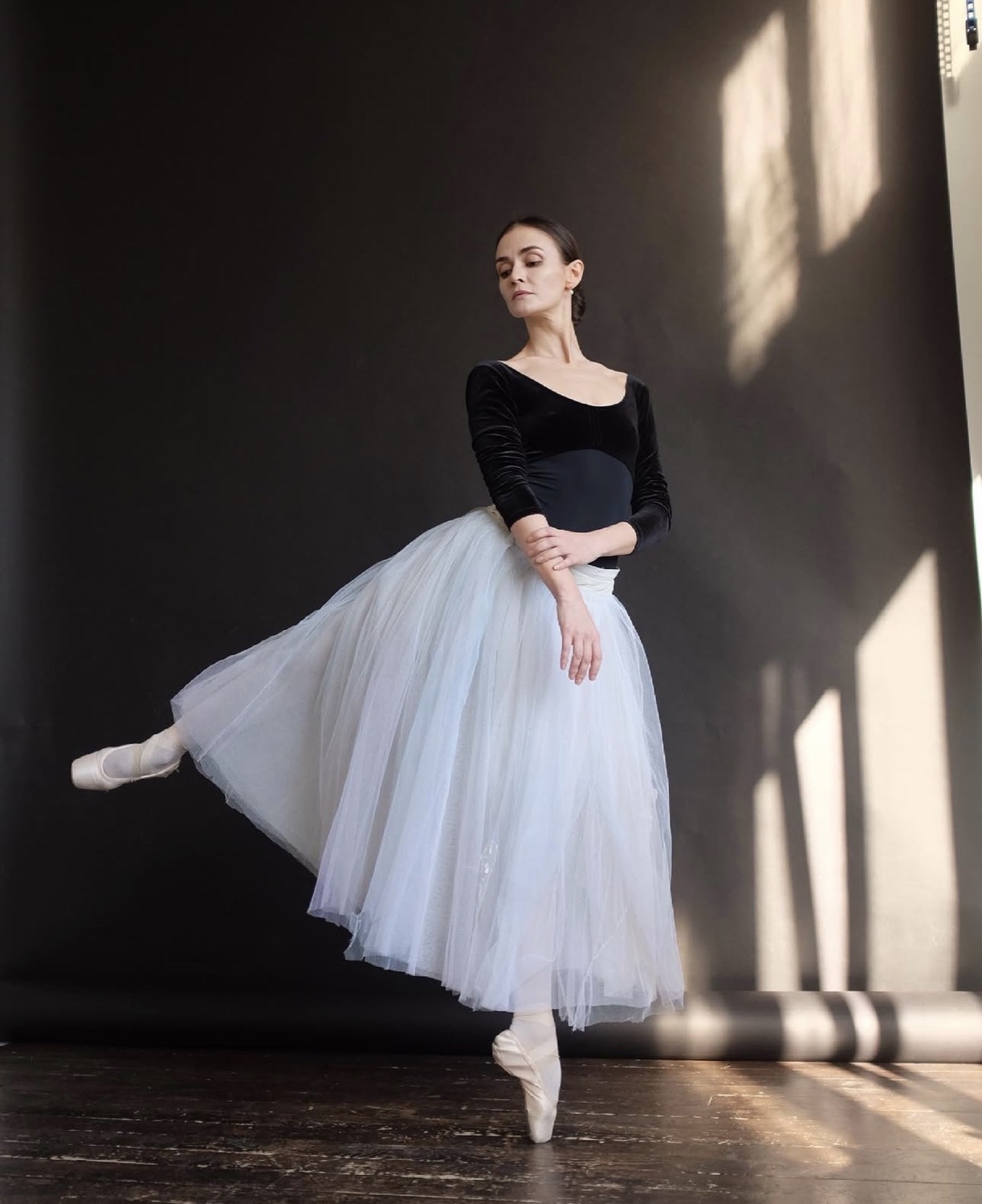
The great distinction of the Russian school is that it never teaches the legs separately from the arms, the head and the gaze. The movement does not begin in the foot but in the torso, and travels outward from there: the back leads, the arms continue, the head and eyes finish the phrase. This is the recognizable wholeness for which the system is studied around the world.
Here two concepts appear, without which one cannot speak of the Russian school. The first is port de bras (literally "carriage of the arms," but in practice the entire plasticity of arms, shoulders and back: their breath and continuity). The second is épaulement (the slight turn of the shoulders and head relative to the hips, which turns a flat pose into a living, three-dimensional figure addressed to the audience). It is precisely épaulement that distinguishes someone who has stepped into a position from someone who is actually dancing.
Strength and softness as one
In ballet there is a temptation to see only lightness. But behind every apparent weightlessness lies work: a deep plié (a soft bend of the knees while keeping the turnout), a controlled en dehors (the outward rotation of the legs from the hip, the basis of classical dance) and a precisely gathered torso. The Russian school teaches you to fuse effort and yielding so that the audience sees only the second. Inside, stability; outside, freedom.
Aplomb and anatomical honesty
Aplomb (stability, the well-built vertical of the body, the sense of one's own center) is what makes everything else possible. Without it there are no turns, no jumps, not even a simple balance on one leg. The Vaganova method builds aplomb patiently and on sound anatomical principles: not by forcing the body, but by understanding how it is made. Turnout develops from the hip, not the foot; the back works without clenching the lower spine; the neck stays free. It is a slow path, but an honest one, which is why it protects the joints rather than wearing them out.
Musicality
In the Russian school, movement is always bound to sound. It is not about "landing on the count" but about hearing the phrase, the breath of the music, its slowing and its rise. This is taught from the very first lesson at the barre: even a simple battement tendu has a beginning, a development and an ending, like a musical phrase.
The Vaganova method compared to other methods
| Method | Origin | Characteristic emphasis | Known for |
|---|---|---|---|
| Vaganova | Russia (St. Petersburg) | Whole-body coordination, expressive back and arms (port de bras, épaulement), aplomb | Broad, robust plasticity; strong jumps and balance |
| Cecchetti | Italy | Fixed daily sequences, strength, balance and anatomical precision | Clean footwork and methodical technique |
| RAD | United Kingdom | Graded syllabus with exams, accessible foundation | Clear teaching structure and examinable progression |
| Balanchine | USA (Russian-rooted) | Speed, extreme lines, attack and neoclassical musicality | The New York City Ballet style: swiftness and amplitude |
Why is it suitable for adults?
The question a teacher hears most often from an adult student is: "Isn't it too late? I'm too stiff, not flexible enough, starting far too old."
I'll answer honestly. If your goal is the stage of the Bolshoi, then yes, a professional career begins in childhood. But if the goal is to dance, to feel your body, to gain a posture and a lightness that no gym can give you, then starting as an adult is entirely normal. More than that: adults have advantages, namely awareness, attention, and the ability to understand a task rather than merely copy it.
The Vaganova method suits the adult student especially well precisely because it rests on understanding rather than blind imitation. It works from the ground up, in small, carefully measured steps, never demanding of the body what it is not yet ready for. Safe progression here is not a concession to age but part of the method itself.
You do not need flexibility to begin. Flexibility, strength and stability are the result of the lessons, not the price of admission.
Why is it the right foundation for serious training?
For parents preparing a child to enter a professional academy, the question is different. Here it is not the joy of movement that matters, but the foundation an admissions panel will recognize.
And that foundation is recognizable. When a child arrives at an audition with a well-placed back, clean positions, a conscious port de bras and natural musicality, it shows at once, and it shows precisely to those who do the selecting. The Russian school gives the very base that professional teachers read at a glance, because many of them were formed in this same system.
It makes sense to begin such preparation early, around the age of six, when the body is still pliable and the attention can already hold a task. But early does not mean forced. A good foundation is laid slowly and carefully; otherwise it cracks under load later.
What a one-on-one private lesson is like
The individual lesson is a luxury of precision. There is no shared group tempo to adjust to. The lesson is built around a single body, with its particularities, its strengths and its weak points.
The structure remains classical: a warm-up, work at the barre (exercices à la barre), then the center of the room, where the same movements are performed without support. But all of the teacher's attention is on you. One correction of posture, given and felt at the right moment, is worth ten repetitions made blindly. The teacher's hands guide the torso gently, the voice leads through the music, and the eye notices what you cannot yet see yourself.
Lessons take place mainly in your home; the studio in Escazú is available as an option. Teaching is in Russian or English, with Spanish support on request. Learn more about private Russian ballet lessons in Escazú, or book your first class with Maria directly.
An honest word on pace and expectations
I do not promise quick results, and any conscientious teacher will tell you the same. The body changes slowly, and in that lies its honesty.
The first weeks are about adjusting: to the barre, to turnout, to the new work of the back. After a few months of regular lessons, a different sense of one's own posture and stability usually appears. After that, deeper still. Ballet gives no instant effect, but it gives what lasts: a different walk, a different relationship with your own body, a quiet sense of composure.
The first step: a trial session
Before mapping out a path, you have to see the starting point. So everything begins with a single 60-minute lesson devoted to your body: how you stand, move and breathe; what is already there and what is worth working on.
It is your trial session with Maria: a professional look, after which you will understand where and how to move forward, whether or not you continue. If you have long been meaning to try, this is a calm and dignified way to begin.
Frequently asked questions
I'm over forty and have never danced. Is it too late to start?
No. A professional career does begin in childhood, but learning ballet for yourself is possible at any age. The Vaganova method is built on gradual progression and on understanding the body, which makes it especially suited to adults starting from scratch, with no prior experience and no particular fitness required.
Do I need flexibility or to be fit for the first lesson?
No. Flexibility and strength are the result of the lessons, not a condition for starting. In the first class only your current state matters; the work begins from there. Arriving "unprepared" is precisely what is normal, and the method is designed to build from that point.
At what age should a child be prepared to enter a ballet academy?
Preparation usually begins around the age of six, when the body is still pliable and the child can already hold attention. The essential thing is to lay the foundation carefully and without forcing, so that it withstands future loads. Starting early helps, as long as it is done without haste.
Why is a private lesson better than a group class?
The individual lesson lets the teacher build the session around one specific body and correct details the moment they appear. For adults this is safer and more effective; for children preparing for admission, more precise in its results. All of the teacher's attention is on a single person.
The first step is a trial session with Maria
Complimentary, studio fee only. Meet Maria, talk about your goals and try some exercises.
Book my trial session →